06 July 2026
Importing or Exporting a Car in Switzerland: Procedures, Taxes and Costs (2026)
Complete guide to importing or exporting a vehicle in Switzerland: customs clearance, 8.1% VAT, 4% automobile tax, form 13.20 A, homologation, export ...

Buying a diplomatic car in Switzerland can be a good deal. These vehicles are often well equipped, sometimes high-end, and offered at attractive prices.
But before buying, there is one simple thing to understand: the main risk is not always mechanical. It is often administrative.
You may see plates such as:
CD: diplomatic corps
CC: consular corps
AT: administrative and technical staff
These vehicles may have benefited from advantages when purchased or imported, especially regarding VAT or customs duties.
A diplomatic car can be attractive because it is often:
well equipped
well configured
sometimes low mileage
properly maintained
offered at an interesting price.
But the price is not enough. Before buying this type of vehicle, the documents must be checked.
Before buying, you should check section:
13 / 14 — Cantonal annotations / Authority decisions
This is where important remarks are usually found.
Some codes should immediately draw attention.
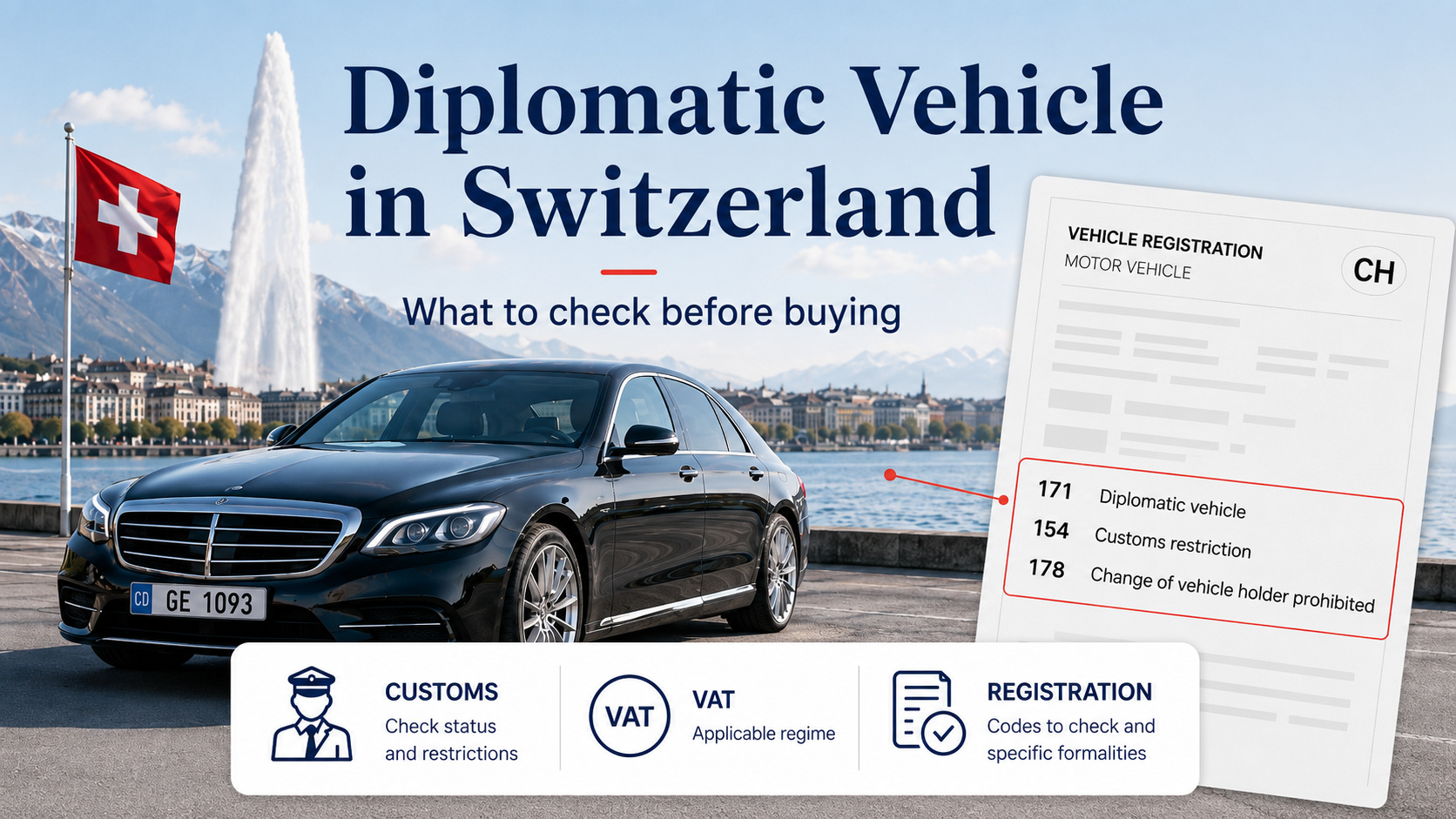
Code 178 generally means that the vehicle cannot change owner until the code has been removed.
In most cases, this is linked to leasing, but it can also appear in other situations.
Before buying, you should ask for the code to be removed or obtain clear confirmation from the vehicle registration office.
Code 154 may indicate a customs-related restriction.
For example:
“Change of vehicle holder prohibited until a certain date without prior customs taxation.”
This means that the vehicle could not be freely sold before that date without customs regularisation.
Even if the date has passed, it is better to check with customs or the vehicle registration office.
Code 171 generally indicates that the vehicle is or was a diplomatic vehicle.
This often means that the vehicle can only be registered by a person without diplomatic privileges if it complies with Swiss standards.
So you need to check whether the vehicle can be registered with normal plates.
To avoid unpleasant surprises, you should contact:
OFDF / BAZG
To check VAT, customs duties and any potential remaining fees.
The vehicle registration office of the canton
To understand the codes on the registration document and confirm whether the vehicle can be registered normally.
Examples: SAN Vaud, OCV Geneva, OCN Fribourg, SCN Valais, SCAN Neuchâtel.
Before buying a diplomatic car, you should ask for:
the full vehicle registration document;
customs documents;
proof that VAT and customs duties have been paid or are not due;
the COC or certificate of conformity;
the service history;
the maintenance invoices.
A garage should not make a firm offer before checking the documents.
Useful sentence to add to an offer:
“Offer valid subject to the vehicle being free of any customs and tax obligations, the restrictive codes being removed or clarified, and the vehicle being registrable in Switzerland with ordinary plates.”
A diplomatic car can be a very good deal.
But before looking only at the price, three things must be checked:
1. Section 13/14 of the vehicle registration document
2. The VAT and customs situation
3. The possibility of registering the vehicle with normal plates
If these three points are clear, the vehicle may be interesting.
If one point is unclear, it is better to get information before buying.
At Sellyourcars, we check the important information before publishing a vehicle to our network of partner garages.
In the case of a former diplomatic vehicle, this includes checking the available documents, the codes on the vehicle registration document, the customs/VAT situation and the possibility of registering the vehicle with ordinary plates.
The goal is simple: to allow garages to make an offer based on clear information and to avoid unpleasant surprises for both the seller and the buyer.
Written on 11 June 2026
06 July 2026
Complete guide to importing or exporting a vehicle in Switzerland: customs clearance, 8.1% VAT, 4% automobile tax, form 13.20 A, homologation, export ...
29 April 2026
Reading time: 7 minutes. Updated on 29.04.2026.
28 April 2026
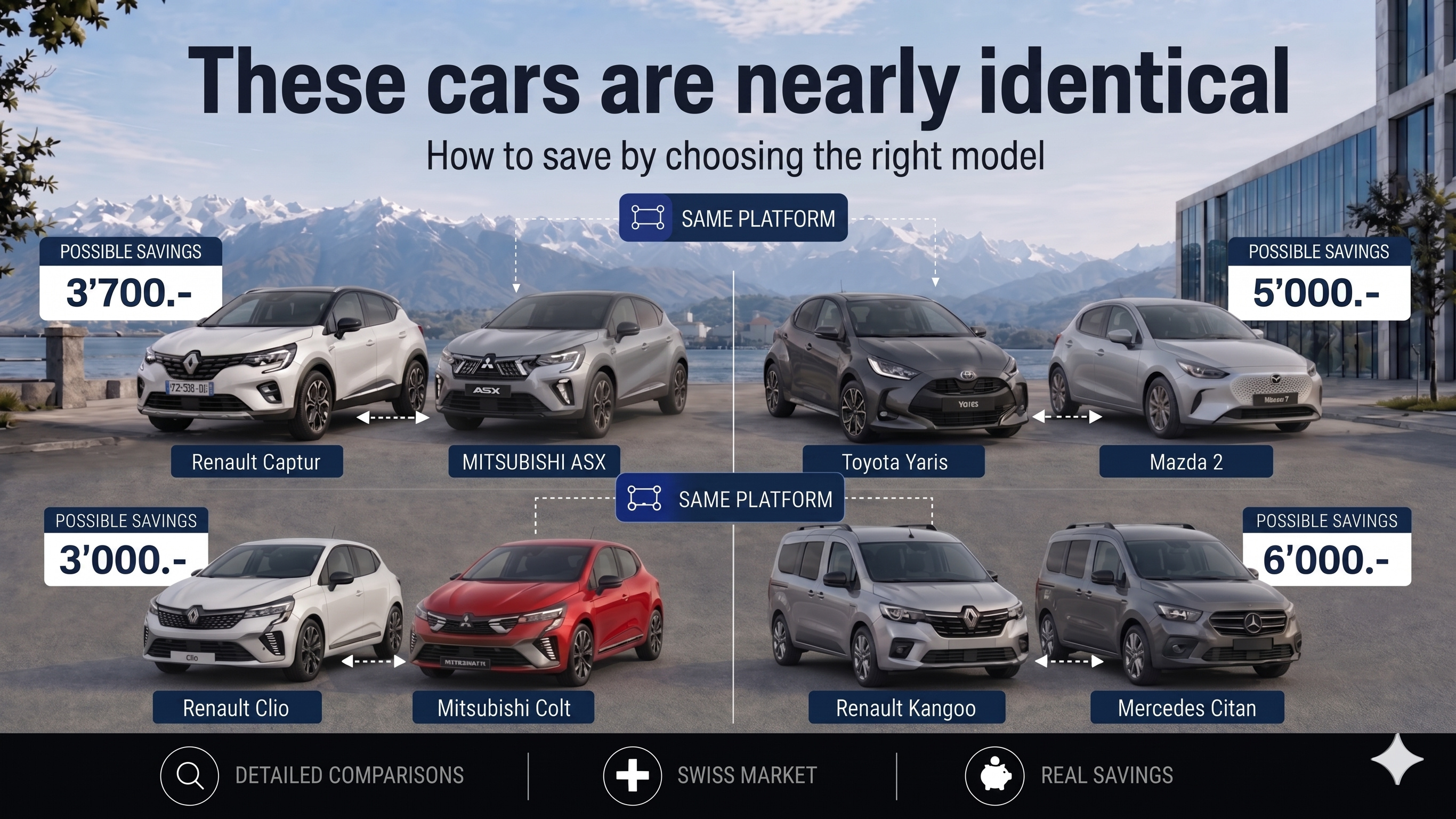
Reading time: 3 minutes. Updated on 28.04.2026 — comparison of identical vehicles in 2026.
16 April 2026
Reading time: 3 minutes. Updated on 16.04.2026 with the WLTP range calculation for 2026